

Be Closer: Family location
Golden Gate Media
I found Be Closer: Family location most useful when I treated it as a shared family routine rather than a magic safety button. Its purpose is straightforward: it uses GPS-based location tracking to help relatives stay aware of where one another are. That can be reassuring when children travel to school, when a parent is driving home, or when several family members are moving around a busy day. It can also become unnecessary, uncomfortable, or distracting if everyone involved does not agree on how location sharing should be used.
As a parenting app from Golden Gate Media, it sits in a category where trust matters as much as convenience. I would not choose it only because the store page promises closeness. I would choose it after asking whether my family needs live location awareness, whether each person understands the arrangement, and whether we are willing to maintain the app when phones, batteries, or routines change. That decision-first approach gives a much clearer picture than looking at the map alone.
What I would consider before installing it
The first question is practical: what problem am I trying to solve? If I want to know whether a child has arrived at school, or I want relatives to find one another during a day out, a family location tool can reduce repeated messages. If I simply want occasional check-ins, a normal messaging app may be less intrusive and easier for everyone to remember.
The second question is about the people being tracked. Location sharing works best when it is openly discussed, with clear expectations about who can see the location and when it is useful. I would explain to a child that the purpose is coordination and safety, not constant interrogation. With teenagers, that conversation becomes even more important. An app cannot repair a lack of trust, and hidden monitoring can create a bigger family problem than the one it was meant to solve.
The third question is reliability in everyday conditions. GPS-based tools depend on the phone being carried, charged, connected, and configured correctly. A map that has not updated is not proof that someone is still in the previous place. I would use the app as one part of a safety plan, alongside a phone call, a known meeting point, and sensible travel habits.
Latest News

Uber Eats Under Pressure: What Happens When Delivery Goes Wrong

How QR & Barcode Scanner Adapts to Android and iOS Innovations

Why Waze Navigation & Live Traffic Is Your Essential Travel Companion

CapCut Mastery: Unleash Hidden Features for Pro-Level Editing

How OS Updates Enhance Roblox Adventures

Teacher Simulator: Exam Time Turns Quick Classroom Judgments into a Repetitive Loop
The app is free to install, which makes trying it less of a financial commitment. It includes optional in-app purchases ranging from $1.99 to $64.99 per item, so I would check each purchase screen carefully before confirming anything. The free entry point is helpful for families deciding whether location sharing fits their routine, but it does not mean every possible convenience inside the app is included without cost.
Its Everyone content rating makes it approachable for a broad household, although an age label should not replace parental judgment. The important issue is not whether the interface is suitable for general audiences; it is whether the family’s rules for location access are suitable for the people using it.
The everyday test I used
Imagine a weekday in which one parent leaves early, a child goes to school, and another family member handles pickup. Without a shared location view, the adults may send several messages: Have you left? Are you nearly there? Did you arrive? A location tracker can reduce that back-and-forth when the answer is already visible. I would still send a message if a delay mattered, but I would not need to ask for a status update every few minutes.
Gallery
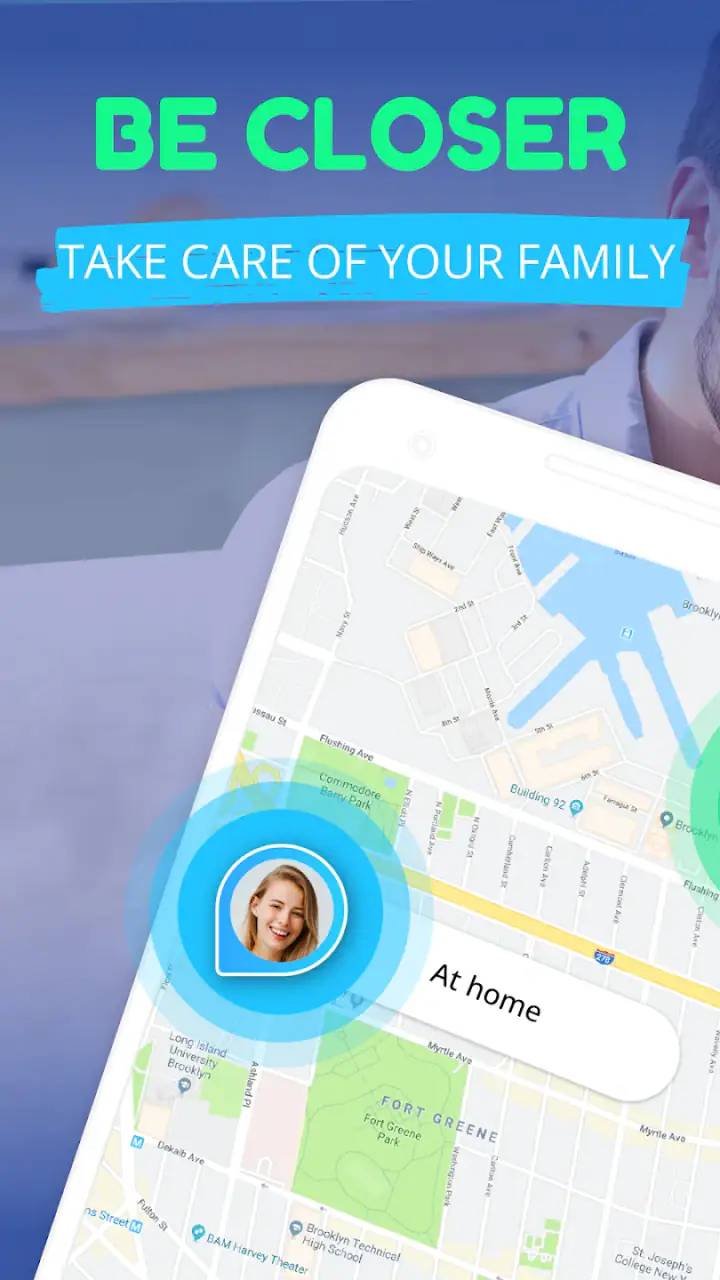
The same arrangement can help during a crowded outing. Rather than relying on a vague description of a nearby shop or entrance, family members can use the shared location context to coordinate. That is a modest benefit, but it is exactly the kind of small friction a parenting tool should remove.
There is a useful habit here that is easy to overlook: agree on what counts as an action. For example, seeing that a child has reached school may be enough; it should not automatically lead to a message demanding an explanation for every stop afterward. I found that location tools work better when the family defines a few meaningful moments instead of treating the map as a constant conversation.
Where Be Closer makes the strongest case
The main strength is focus. Be Closer is built around family location rather than asking me to turn a general-purpose social platform into a tracking system. That makes the purpose easier to explain to relatives who do not want another complicated service. The store summary describes GPS family location tracking, and that central idea remains clear when I consider how the app fits into a household.
It is also a good match for families with changing schedules. A parent may be at work, a child may be traveling between school and activities, and another relative may be responsible for pickup. In that situation, location context can be more useful than a chain of messages that quickly becomes outdated. I especially value it for coordination, not surveillance: knowing where to meet is a better reason to open it than checking on someone without a specific need.
The app’s popularity gives it a degree of practical reassurance for people who prefer an established family tool. It has an average rating of 4.5 from around 134 thousand ratings, and it has passed 10 million installs. Those figures do not guarantee that it will fit my household, but they suggest that the basic idea is familiar to a large audience rather than being an obscure experiment.
Another advantage is the low barrier to a trial. Because the app is free, I can test whether relatives actually use the location view before committing to a paid service. That matters more than a long feature list. A tracking app is only useful when the family members who need it can operate it comfortably and remember to keep their phones ready.
Small habits that make it more useful
I would start with a short trial involving only the people who genuinely need access. Before adding everyone, I would decide who is allowed to view locations and what situations justify checking. This avoids turning setup into a family-wide monitoring project and makes it easier to identify whether the app solves a real problem.
I would also create a backup rule for stale information. If the location appears unchanged for longer than expected, the next step should be a call or message, not an assumption. This is one of the most important practical limitations of any GPS tracker: the screen can look precise while the real-world situation has changed.
A third useful habit is to review the arrangement when routines change. A school term, a new job, a different caregiver, or a new phone can make old sharing expectations irrelevant. Removing people who no longer need access is just as important as adding the right ones. In my view, responsible maintenance is part of using Be Closer well, not an optional extra.
I would keep battery awareness in the routine too. A location app cannot help if the phone is left at home or runs out of power. For children who travel independently, a simple charging habit before leaving is more valuable than relying on the map as an emergency guarantee.
What the current app details tell me
The app was released on February 5, 2019, and the current version is 4.7.8. That gives me the impression of a product that has had time to mature, while the version number also reminds me to keep the app updated when possible. Updates are particularly relevant for location tools because compatibility and background behavior can affect whether the experience feels dependable.
It supports devices running OS 9 or later. Before inviting relatives, I would check the operating system on every phone in the group rather than assuming that one compatible device means the whole family is ready. A family app becomes frustrating quickly when one member cannot install or update it.
The developer is Golden Gate Media, and the app is presented as a parenting tool rather than a general social network. That distinction matters to me. I would expect the best experience from a household that wants a dedicated location-sharing routine, not from someone looking for a broad communication platform with occasional map access.
Where another type of solution may fit better
Be Closer is not automatically the right choice for every family. If my main need were chatting, sharing photos, or arranging events, a messaging app might be a better center of gravity. Adding a location tool to a family that already communicates effectively can create another account, another notification source, and another setting to maintain without solving a genuine problem.
If I needed occasional directions for a one-time outing, a standard map-sharing function would probably be simpler. There is little value in establishing an ongoing family tracking routine for a single meeting. Likewise, if everyone already uses a trusted location feature built into their phones and is satisfied with it, switching to a separate parenting app may not deliver enough improvement to justify the change.
Families with strong privacy concerns should think carefully before adopting any continuous location arrangement. Even when the goal is safety, the emotional cost of being watched can be real. I would skip Be Closer if a family member feels pressured into sharing or if the adults cannot agree on reasonable boundaries. Consent and clarity are not technical details; they determine whether the app supports family life or damages it.
It may also be a poor fit for people who expect emergency-grade certainty. GPS information can be delayed, inaccurate, or unavailable for ordinary reasons, and the app should not replace emergency services or direct contact. For a child who is especially young, I would combine any digital location tool with supervision and a simple plan for what to do when separated.
There is also a social trade-off. A visible location can answer a practical question quickly, but it can encourage unnecessary checking. I would avoid installing it merely to reduce anxiety if that anxiety will lead to constant refreshing. In that situation, a scheduled check-in routine may be healthier and easier to manage.
The real cost of switching
Moving from informal messages to Be Closer requires more than downloading the app. Everyone needs to install it, understand the sharing arrangement, and remember which app to open. The setup cost is small for a motivated family, but it becomes noticeable when relatives have different technical confidence or do not want to change their habits.
There is also a communication cost. I would explain the purpose before sending invitations, agree on boundaries, and decide what happens when someone pauses sharing. Without that conversation, a notification or missing location can easily be misread. A clear family rule can prevent the app from becoming a source of suspicion.
The financial side deserves attention as well. The app is free, but optional purchases can cost from $1.99 to $64.99 per item. I would begin without buying anything, use the core experience long enough to judge whether it genuinely helps, and involve the household decision-maker before approving an upgrade. That approach keeps the trial focused on usefulness rather than on unlocking every available option.
Switching back is easy in theory but can be awkward in practice. Once relatives get used to checking a map instead of sending a message, they may forget the older routine. I would keep a simple backup method active during the trial, especially for school pickups or travel. That way, a technical issue does not leave anyone without a way to communicate.
My recommendation for different kinds of families
I recommend Be Closer to families who regularly coordinate several people’s movements and want a dedicated GPS location tool without paying at the point of installation. It is particularly sensible when the same questions come up repeatedly: Has the child arrived? Is the pickup person nearby? Where should we meet? In those cases, a shared location view can remove genuine friction.
I would recommend starting slowly. Install it on the phones that matter most, agree on privacy expectations, and test it during normal routines rather than waiting for a stressful trip. Judge it by whether it reduces unnecessary messages and improves coordination, not by how often the map is opened. If it creates more checking than clarity, that is useful information too.
I would not recommend it to someone who only needs occasional map sharing, already has a satisfactory built-in family location solution, or feels uneasy about ongoing tracking. The free price makes experimentation accessible, but free installation does not remove the privacy, battery, attention, and maintenance trade-offs.
For my own decision, the strongest reason to choose it is its clear parenting focus and straightforward use case. The strongest reason to hesitate is that location awareness can be mistaken for certainty. Used with consent, backup communication, and sensible limits, it can be a practical household aid. Used as a substitute for trust or direct contact, it is likely to disappoint.
Overall, I see Be Closer as a useful coordination layer rather than a complete family safety plan. Golden Gate Media has made an app that appeals to families wanting one place for location awareness, and its broad adoption shows that the need is real. I would try it when repeated travel and pickup questions are genuinely slowing the household down, then keep it only if it makes those moments calmer. The best reason to use it is clearer coordination, not constant surveillance.
FAQs for Be Closer: Family location
What is Be Closer: Family Location used for?
Be Closer: Family Location is a family tracking app designed to help users keep track of their loved ones' whereabouts in real-time. It provides peace of mind by ensuring that family members can be located easily, especially in emergencies. The app uses GPS technology to offer accurate location updates and is ideal for families wanting to stay connected.
How does Be Closer ensure the privacy of its users?
Be Closer: Family Location prioritizes user privacy by using advanced encryption methods to protect location data. Only people you authorize can see your location. The app also allows users to customize privacy settings, enabling them to decide who can view their location and when, ensuring a secure and private experience.
Is Be Closer: Family Location compatible with both Android and iOS?
Yes, Be Closer: Family Location is available for both Android and iOS devices. Users can download it from the Google Play Store or the Apple App Store. The app is designed to work seamlessly across different platforms, allowing families with mixed-device ecosystems to stay connected without any hassle.
Does Be Closer affect battery life significantly?
While Be Closer: Family Location uses GPS technology, it is optimized to minimize battery consumption. The app runs efficiently in the background and uses intelligent algorithms to update locations, reducing battery drain. Users can further manage battery usage by adjusting location update settings within the app.
What features does Be Closer offer aside from location tracking?
In addition to real-time location tracking, Be Closer offers features such as location history, geofencing alerts, and emergency notifications. Users can set up safe zones and receive alerts when family members enter or leave these areas. The app also allows for easy communication through integrated messaging features, enhancing family connectivity.
Pros
- Real-time location tracking is accurate.
- User-friendly interface for easy navigation.
- Battery usage is optimized for efficiency.
- Geofencing alerts for custom locations.
- Quick setup with minimal steps required.
Cons
- Limited free features without subscription.
- Occasional GPS signal delays reported.
- Requires constant internet connection.
- Privacy concerns with location sharing.
- Lacks integration with smart home devices.


